Bergen → Stavanger → Oslo
Norway — view trip
Fjord city, food festival, and a capital that swims in its own harbour.
- Days
- 9
- Pace
- Moderate
From
$1,755
Rogaland, Norway
A small white-timber old town on a working harbour, the jumping-off point for Preikestolen, and for four days each June the best food festival in Scandinavia.
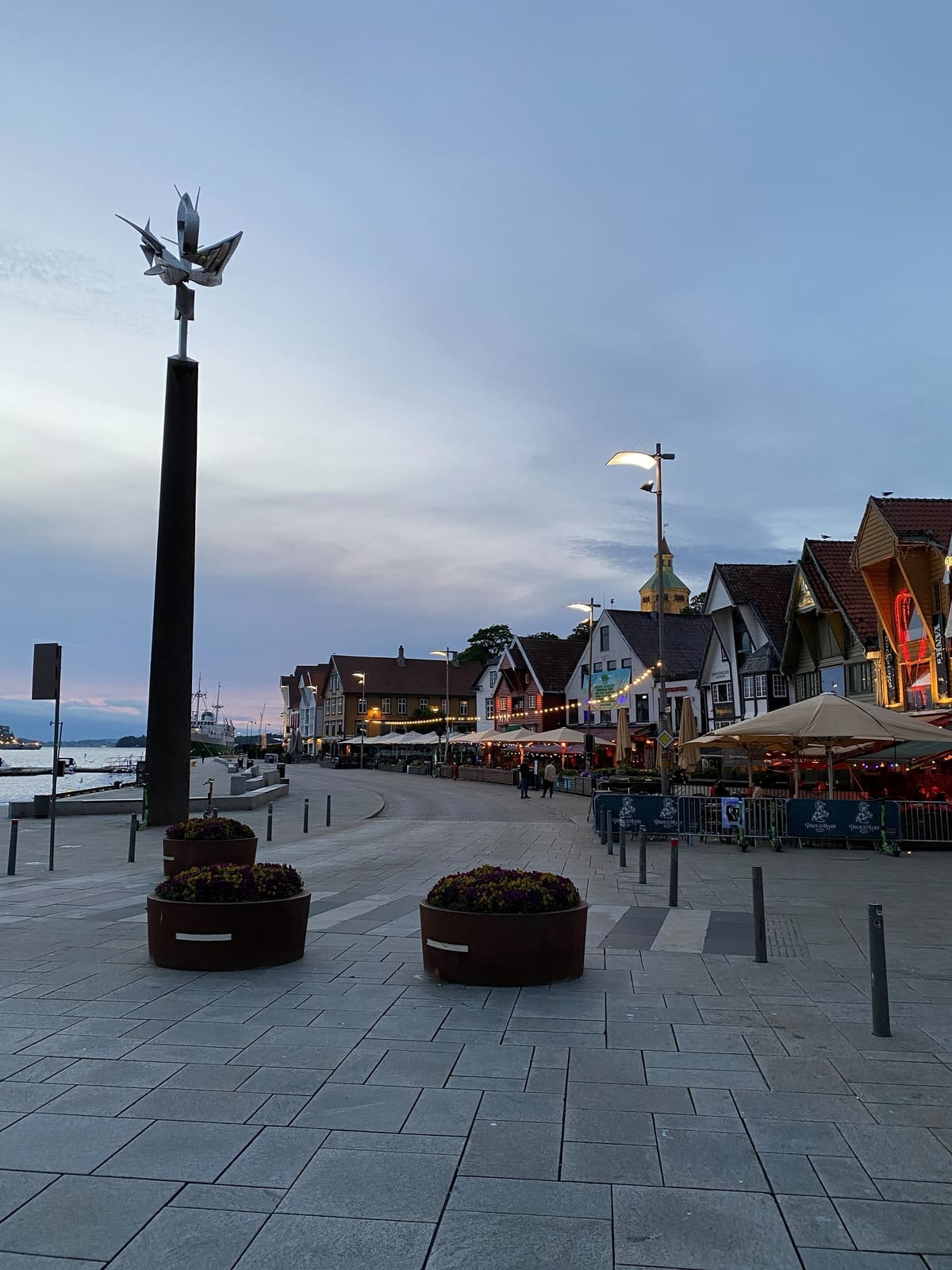
Stavanger is a small city that got rich on oil and spent some of it well. It has the best-preserved wooden old town in Northern Europe, a museum about petroleum that is far better than that sentence suggests, and — an hour away — the cliff that is on the cover of every book about Norway.
It is also where the Gladmat food festival happens in July, which is the largest of its kind in the Nordics and takes over the whole harbour.
You have already chosen how you are staying. This is what the place gives you at each level, and here more than anywhere the headline attraction is a walk that costs almost nothing.
Gamle Stavanger is 170-odd white wooden houses from the eighteenth and nineteenth centuries on cobbled lanes above the harbour, still lived in, with roses growing up the fronts. It is free, it takes an hour, and it is the reason to be here.
Øvre Holmegate — "Fargegaten", the coloured street — is the opposite: every building painted a different bright colour by a local hairdresser who thought the street was grey. It works.
Sverd i fjell, three ten-metre bronze swords driven into the rock beside the fjord, marks the battle that unified Norway. It is out of town on a bus and it is free.
Stavanger Cathedral is the oldest in Norway still in continuous use, from the twelfth century, and costs very little. The city is full of street art from the Nuart festival, and a wander looking for it is a decent afternoon in itself.
The Norwegian Petroleum Museum is the surprise of the trip. It is a serious, honest museum about how the oil got out of the sea, what it did to this country, and what it is doing to the climate — built into a structure that looks like a rig on the waterfront. Two hours, and nobody expects to enjoy it as much as they do.
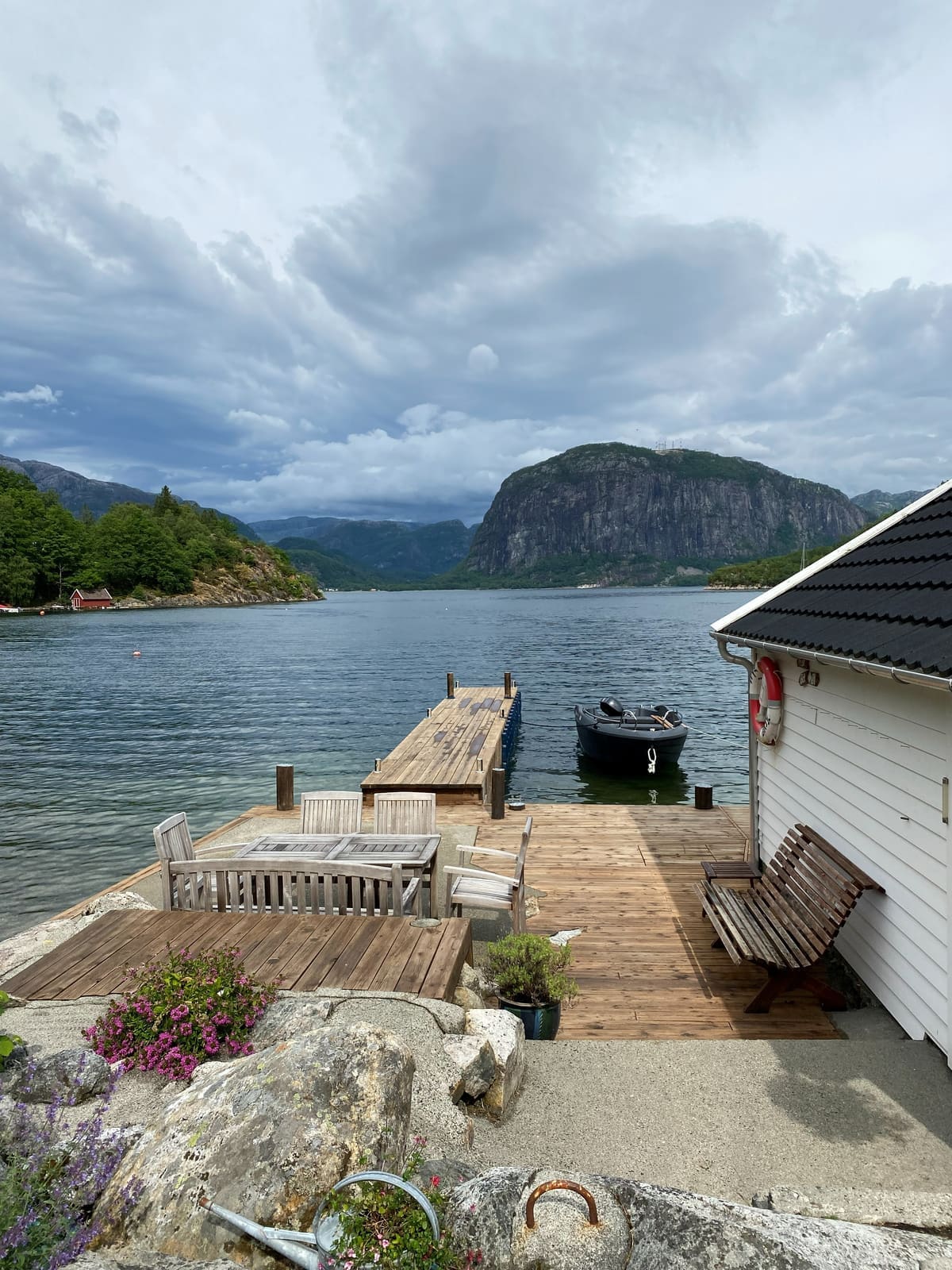
A Lysefjord boat takes about three hours and goes under Preikestolen rather than up it, past waterfalls and a goat farm, which is the version that involves no hiking at all. You see the cliff from below, six hundred metres up, with people the size of pins on the edge.
The Iron Age Farm is a reconstructed settlement at Ullandhaug where people in period dress will tell you how it worked.
Flor & Fjære is an hour's sailing out and back and is a subtropical garden on an island at 59 degrees north, which should not be possible. Palm trees, 50,000 flowers, and a greenhouse dinner that is included in the visit. It runs summer only and books out.
In town, Renaa is the Michelin kitchen and Sabi Omakase is the one people book months ahead for — a Japanese counter with Norwegian fish, which turns out to be an unfairly good combination.
A private RIB into the Lysefjord does in ninety minutes what the tour boat does in three hours, and gets much closer to the rock.
Preikestolen the easy way is still a walk — there is no road to the top, and anyone who tells you otherwise is selling something. What money buys is the rest of it: a car to the trailhead at the hour when the coaches are not there, a guide who knows which of the four hours to take slowly, and somewhere to be afterwards.
The alternative is the helicopter, which is the only way to see the Lysefjord and the rock from above, and takes about half an hour of flying to cover what a day of walking shows you.
Kjeragbolten — a boulder wedged in a chasm a thousand metres up — is the harder, longer, less crowded sibling and needs a full day and a driver to make sense.
The centre is entirely walkable and the old town is five minutes from the harbour.
Preikestolen is about four hours of walking round trip, it is rocky rather than steep, and it needs real shoes and a waterproof whatever the forecast says. The car park is forty-five minutes from the city and the buses are timed around the hike.
July is Gladmat and the city is full. Norwegian summer daylight runs to midnight, so an evening walk is a genuine option.
Updated 5 October 2026 · Guideless · 4 min read
Hotels and trains are handled. Choose where you stay and what you join; the rest of the week is yours.
Build this trip