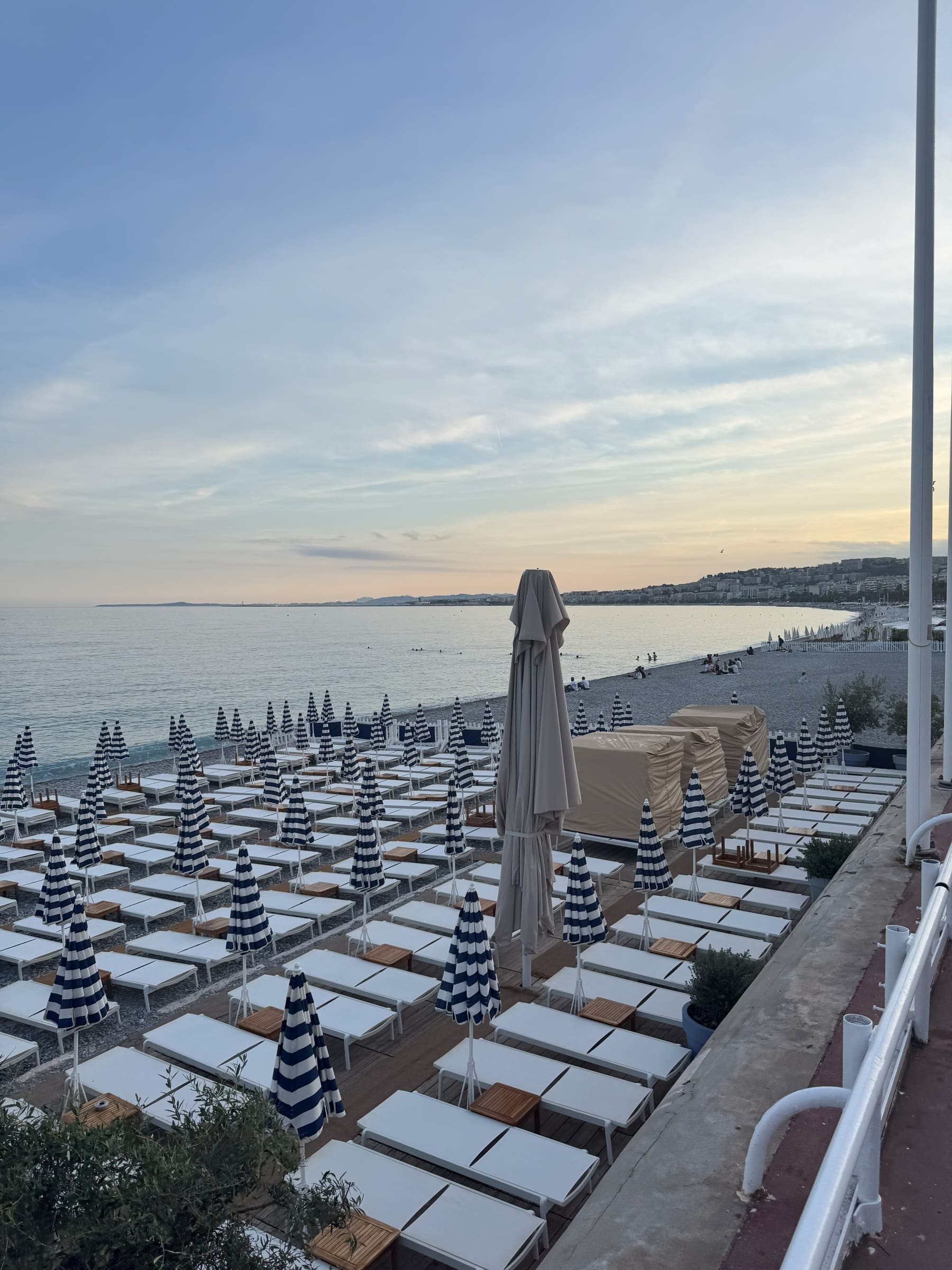
Nice → Avignon → Paris
Southern France — view trip
Riviera light, Provençal wine, Parisian evenings — on your own terms.
- Days
- 9
- Pace
- Moderate
From
$2,615
Île-de-France, France
The city that needs no guide — which is rather the point.
Paris is the end of the route, and three days is not enough to see it — which is the good news, because it means you can stop trying. The city rewards doing one quarter properly far more than crossing four of them on the metro.
Pick a neighbourhood a day and walk it. Everything below is arranged that way.
You have already chosen how you are staying. This is what the city gives you at each level. Read the one you booked, then read the others — nothing here is fenced off, and half of the best of Paris is free to everybody.
The version that costs almost nothing, and is not a lesser Paris.
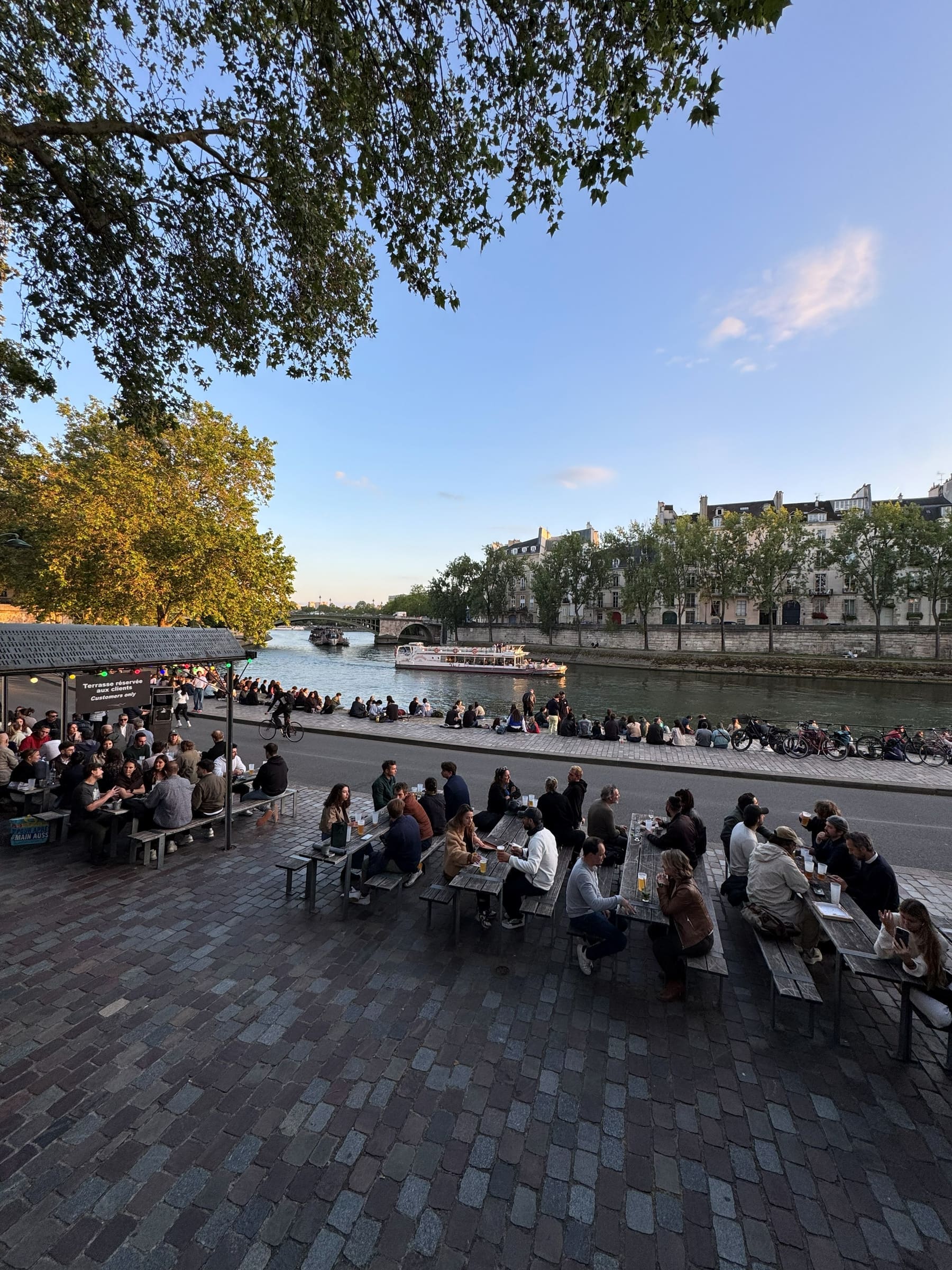
Walk the Seine. The stretch from the Île Saint-Louis west past Notre-Dame and the Louvre to the Tuileries is the city explaining itself, and the lower quais get you down at water level away from the traffic.
Père Lachaise is free, enormous, and the strangest and best hour in the east of the city — a walled town of tombs on a hill with a map you will still get lost with. Luxembourg Gardens is free and is where Paris sits down. Place des Vosges in the Marais is free, is the oldest planned square in the city, and has an arcade to stand under when it rains.
Eat on a market street rather than in a restaurant: Rue Montorgueil or Rue des Martyrs, a baguette, something from a fromagerie, and a bench.
Vélib' is the bike share, and the separated lanes along the Rue de Rivoli and the canals have made cycling here genuinely pleasant in a way it was not ten years ago. Canal Saint-Martin on a warm evening is where the city is youngest.
Free on the first Sunday of the month: many national museums. It is also when everybody else goes.
Two a day is one too many. Pick one, properly.
The Musée d'Orsay is the best single museum in the city and the easiest to love — a converted railway station with the Impressionists on the top floor under the clock. The Louvre is not one museum but forty, and the only sane approach is to choose two wings and ignore the rest; go late on a late-opening evening and skip the Mona Lisa entirely.
Sainte-Chapelle is fifteen minutes and fifteen metres of stained glass, and is the single most astonishing room in Paris. Go on a bright day. Musée Carnavalet, the museum of the city itself, is free for its permanent collection and is criminally under-visited. The Musée Picasso and the Orangerie — the latter for two oval rooms of Monet's water lilies — are both an hour rather than a day, which is their advantage.
Buy the Paris Museum Pass only if you are doing more than three of these; otherwise it costs more than it saves.
Paris is a city where booking two months ahead is a normal thing to do.
The bistros people fly in for — Septime, Frenchie, Le Comptoir du Relais — open their books a month or more out and fill the same day. Pick one and plan the evening around it rather than hoping.
For the room rather than the plate, the Ritz's Bar Hemingway does the best cocktails in the city in a space the size of a living room, and you will queue to get in.
Opéra Garnier can be toured by day and it is worth it for the staircase and the Chagall ceiling even if you never see a performance there. The Fondation Louis Vuitton in the Bois de Boulogne is a Gehry building that is the exhibit as much as anything hung inside it.
A Seine dinner cruise is the one tourist thing worth defending: the monuments are lit, you are moving, and it solves an evening.
Paris with the queues and the metro removed.
A car and driver makes Versailles a half-day rather than an expedition — and the trick there is to skip the château's state apartments at midday and spend the time in the gardens and at the Trianon, which is where the court actually relaxed. Giverny, Monet's garden, is an hour out and is a different and gentler thing.
In the city, the three-star rooms — Guy Savoy, Le Cinq, Épicure — take lunch bookings that cost a fraction of dinner for the same kitchen, which is the best value in fine dining anywhere and almost nobody does it.
A private after-hours museum visit is arrangeable at several of the smaller institutions, and the Louvre without anybody else in it is a different building.
The metro is fast, cheap and goes everywhere; buy a carnet or use a contactless card. Above ground, walking is usually faster than you think — Paris is much smaller than the map suggests.
Most museums close Monday or Tuesday, and the big ones have one late evening a week which is by far the best time to go. Restaurants stop serving lunch around 14:00 and do not start dinner until 19:30; the gap is real and it catches people out.
August empties the city of Parisians and closes a lot of the good small places.
Updated 13 October 2026 · Guideless · 5 min read
Places and ideas from Guideless editors. Check current details before you go.
Canal Saint-Martin walk
Walk Quai de Valmy past locks, footbridges and waterside cafés, continuing toward Bassin de la Villette if you want a longer route. The canal is public and untimed.
10th arrondissement
Coulée verte René-Dumont
Start behind the Bastille opera house and follow the planted former railway above Avenue Daumesnil. The full green route runs about 4.5 km toward Porte Dorée.
12th arrondissement
Luxembourg Gardens
Pause around the central pond, Medici Fountain, orchards and sculpture-filled gardens between Saint-Germain and the Latin Quarter. Entry to the garden is free.
6th arrondissement
Canal picnic toward La Villette
For a longer local afternoon, continue north from Canal Saint-Martin to the Bassin de la Villette, parks and street-art streets around the water.
19th arrondissement
Hotels and trains are handled. Choose where you stay and what you join; the rest of the week is yours.
Build this trip