Bergen → Stavanger → Oslo
Norway — view trip
Fjord city, food festival, and a capital that swims in its own harbour.
- Days
- 9
- Pace
- Moderate
From
$1,755
Østlandet, Norway
A capital that swims in its own fjord. Floating saunas off the opera house, the Munch museum above them, and forest at the end of every metro line.
Oslo is a capital city with a forest on one side and a fjord on the other, and the remarkable thing is how easily you get into both. The ferries to the islands run on the same ticket as the tram. The metro takes you to the treeline.
It is also, since about 2021, a city with two genuinely world-class new museums, which it did not have before.
You have already chosen how you are staying. This is what Oslo gives you at each level, and it has the best free-to-expensive ratio of anywhere on this route.
The Opera House has a roof you are invited to walk up. It rises straight out of the fjord in white marble, there is no barrier, no ticket and no fuss, and the view back over the city is the best free thing in Oslo. Go at dusk.
Vigeland Park holds more than two hundred sculptures by one man, of human beings at every age and in every mood, and is open at all hours for nothing. It is strange, it is enormous, and it is unlike any other sculpture park.
The island ferries from Vippetangen run on an ordinary public transport ticket. Hovedøya has a ruined Cistercian monastery and beaches; Gressholmen has fewer people. This is what Oslo does in summer and it costs the price of a tram ride.
Akershus Fortress grounds are free to walk, and the Botanical Garden in Tøyen is free too.
Oslo rebuilt its cultural quarter and it was worth it.
The Munch museum is thirteen floors on the waterfront, holding the collection Munch left the city in his will — which is most of what he made. There are several versions of The Scream in the building and they are rotated for conservation, so which one you see is luck.
The National Museum opened in 2022 and is the largest in the Nordics. Its version of The Scream — the famous 1893 painting — hangs here rather than at the Munch, which catches people out. Give it three hours and the top-floor collection of Norwegian landscape painting the attention it deserves.
Out on Bygdøy, reachable by ferry, the Fram museum is built around the actual ship that went furthest north and furthest south, and you can walk on its decks. The Kon-Tiki is next door. The Viking ship collection has been closed for a long rebuild into the Museum of the Viking Age — check whether it has reopened before you plan a day around it.
Get in the water. This is the thing Oslo does that other capitals do not.
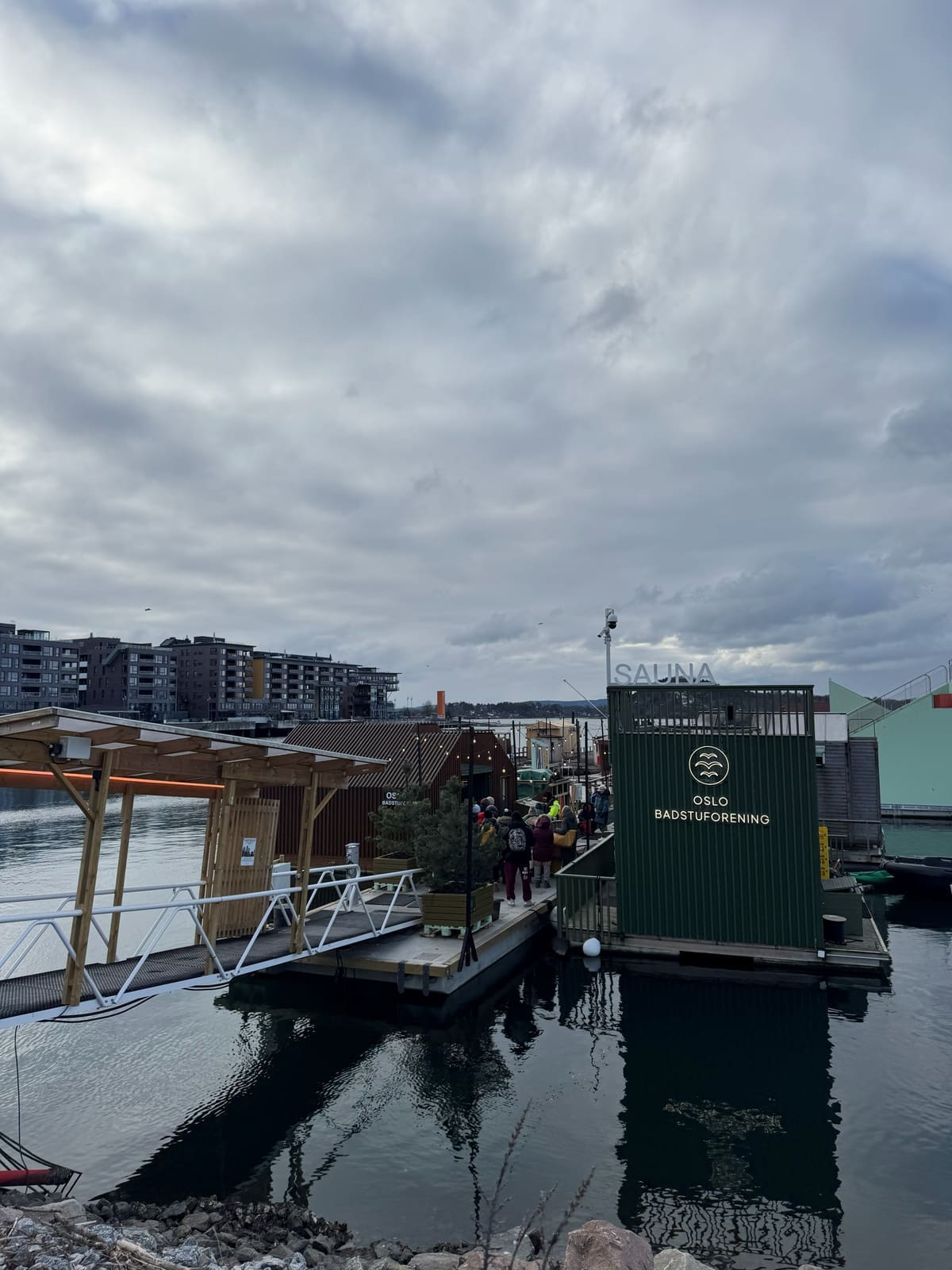
The floating saunas on the harbour — Oslo Badstuforening and several others — are wood-fired boxes on the water that you sit in and then jump off, into the fjord, in any month of the year. It is the single most Norwegian hour available and it is not expensive.
A fjord cruise on a silent electric boat, or one of the old wooden sailing ships, turns the archipelago into an afternoon. Holmenkollen, the ski jump on the hill, has a lift to the top of the tower and a view down the whole fjord.
Mathallen is the food hall for grazing; for a proper table, the restaurants around Tjuvholmen and Aker Brygge put you on the water.
Maaemo has three Michelin stars, is one of the very few in the Nordics, and books months out. It is an evening rather than a meal.
A private boat in the Oslofjord reaches the outer islands and the summer houses that the public ferries do not, and can be an afternoon or a whole day with lunch somewhere on an island.
Inland, a driver makes the Marka forest and the lakes above the city into a morning, and in winter the same drive reaches the ski slopes in under half an hour — Oslo is the only capital in Europe where that is true.
The Astrup Fearnley at Tjuvholmen, a Renzo Piano building under a glass sail, holds the contemporary collection and is the one serious gallery most visitors miss.
One ticket covers tram, bus, metro and the island ferries, which is the single best thing to know about the city. The Oslo Pass adds the museums and pays for itself at about three of them.
Museums mostly close Monday. Oslo is expensive — genuinely, not as a figure of speech — and the way locals handle it is to do the free things in daylight and eat at Mathallen or a food hall rather than a restaurant every night.
Summer daylight runs past eleven at night. In winter it does the opposite, and the saunas and the lit ski trails are how the city copes.
Updated 5 October 2026 · Guideless · 4 min read
Hotels and trains are handled. Choose where you stay and what you join; the rest of the week is yours.
Build this trip