Bergen → Stavanger → Oslo
Norway — view trip
Fjord city, food festival, and a capital that swims in its own harbour.
- Days
- 9
- Pace
- Moderate
From
$1,755
Vestland, Norway
Wooden wharf houses on the harbour, seven mountains around the city, and the wettest weather in Norway worn as a badge. The funicular and the cable car both start in town.
Bergen was the biggest city in Norway for six hundred years and the Hanseatic League ran its trade from a row of wooden warehouses on the harbour that are still there. It rains here roughly two days in three. Both facts matter more than anything else you will read about the place.
Bring a waterproof, accept the weather rather than waiting it out, and the city is one of the most likeable in Europe.
You have already chosen how you are staying. This is what Bergen gives you at each level, and because the best things here are outdoors and mostly free, the gap between the tiers is smaller than anywhere else on the route.
Bryggen is the reason the city is on the UNESCO list: a row of crooked wooden trading houses on the harbour, leaning into each other, with passageways behind them you can walk through. It is free and it is best early, before the cruise passengers.
Walk up Mount Fløyen rather than taking the funicular — it is about forty-five minutes on a good path from behind Bryggen, it is free, and the view at the top is the same one. There are goats. From the top you can carry on into the forest for as long as you like, and the trail across to Ulriken (the "Vidden" hike, four to six hours) is one of the great city walks in Europe on a clear day.
The Fisketorget fish market is touristy and priced accordingly, but the indoor hall does a decent cheap plate and it is the easiest introduction to what comes out of this coast.
Bergenhus Fortress and the grounds around the Rosenkrantz Tower are free to walk.
Bergen indoors, for the two days in three.
KODE is four museums along the lake in the middle of town, sold on one ticket. KODE 3 holds the largest collection of Edvard Munch outside Oslo, which is the one to see if you only do one.
Troldhaugen was Edvard Grieg's house, twenty minutes out on the light rail, and it is a small yellow villa above a lake with his composing hut on the shore. There are lunchtime recitals in the concert hall in season, which is the way to see it.
The Fløibanen funicular earns its fare on a wet day or tired legs, and the carriages are worth riding once regardless.
Fantoft stave church is a reconstruction — the original was burned down in 1992 — but stave churches are remarkable buildings and this is the accessible one.
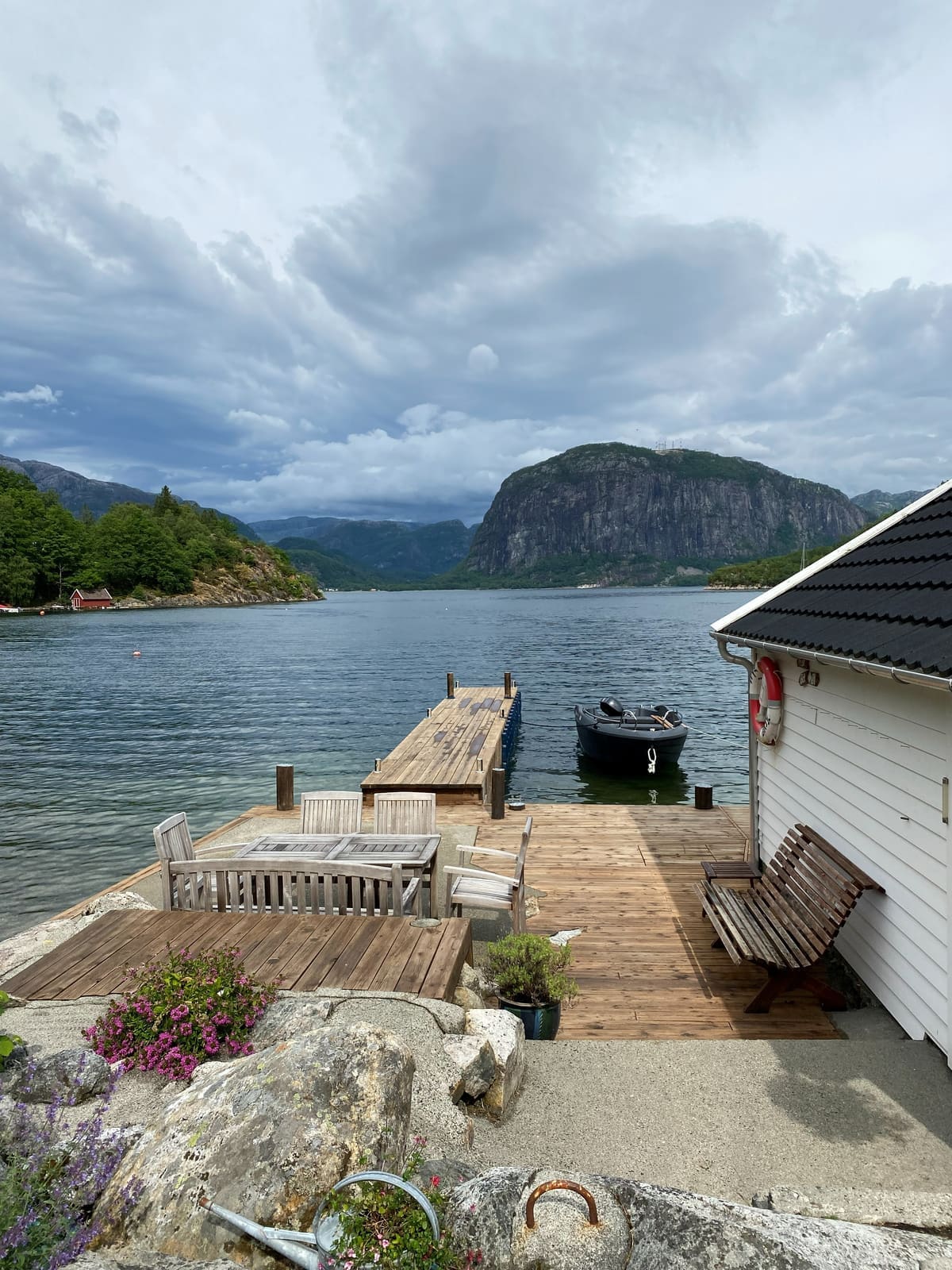
Bergen from the water, which is how it was meant to be seen.
A fjord cruise to the Mostraumen narrows in the Osterfjord takes about three hours, passes under waterfalls close enough to touch, and is the short version of the thing people come to Norway for. It leaves from the harbour in the middle of town.
For dinner, Cornelius is on its own island, twenty-five minutes by boat, and the boat is part of the booking. The menu is decided by what was landed that day. It is the most Bergen thing you can do with an evening.
In town, Lysverket and Bare are the serious kitchens, both built on what comes off this coast.
The fjords proper, which are further away than people expect.
The Hardangerfjord and the Sognefjord are both reachable as long day trips with a driver, and that is the difference between seeing one and reading about one. Vøringsfossen, a 180-metre waterfall with a new footbridge across the gorge, sits on the Hardanger route.
A private RIB into the fjords gets you into arms of water the big boats cannot enter, and moves fast enough to make the distances work.
And if you are going on to Oslo, the Bergen Railway is one of the great train journeys in the world — seven hours across the Hardangervidda plateau, above the treeline for much of it. It is worth planning the trip around rather than flying.
The centre is small and walkable; the light rail (Bybanen) covers the rest and runs to the airport.
It rains. About 230 days a year. The city is built for it and so should you be: a proper waterproof shell, not an umbrella, because it usually arrives sideways.
Summer daylight runs very long — in June it barely gets dark — which makes evenings much bigger than they look on paper.
Updated 5 October 2026 · Guideless · 4 min read
Hotels and trains are handled. Choose where you stay and what you join; the rest of the week is yours.
Build this trip